
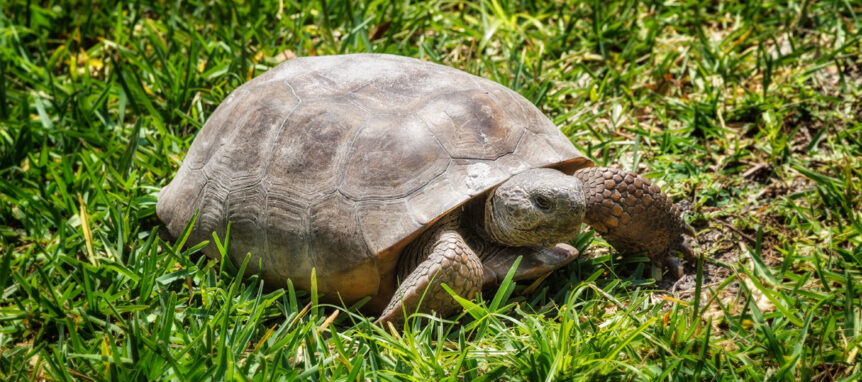
Florida is home to an incredible variety of wildlife, but few animals have as much influence on their neighbors as the gopher tortoise. Known for digging long underground burrows, these fascinating reptiles create shelter that can benefit hundreds of other species. That important role has earned the gopher tortoise a reputation as one of Florida’s true ecosystem engineers.
At Camp Live Oak, exploring the natural environment of Hugh Taylor Birch State Park gives campers opportunities to learn about Florida wildlife and the habitats animals depend on. The gopher tortoise is a perfect example of how one species can play an important role in an entire ecosystem and why protecting Florida’s natural spaces matters.
Meet the Gopher Tortoise
The gopher tortoise is a land-dwelling tortoise native to the southeastern United States. Unlike Florida’s freshwater and sea turtles, gopher tortoises are strictly terrestrial animals, spending their lives on land and relying on dry, sandy habitats where they can dig their distinctive underground burrows.
They are easy to recognize by their sturdy shells and powerful front legs, which are specially adapted for digging. Adults primarily eat grasses, leaves, flowers, fruits, and other vegetation.
Gopher tortoises are generally slow-moving, but don’t let their relaxed pace fool you. Beneath the ground, these animals are capable of some impressive construction.
An Incredible Underground Home
The gopher tortoise gets its name from its remarkable ability to dig. Using its strong front legs, a tortoise can excavate an underground burrow that provides a protected place to rest and escape harsh conditions.
These burrows can extend many feet underground and maintain more stable temperatures and humidity than the environment above the surface. That makes them especially valuable during Florida’s hot summers, cold periods, and other challenging conditions.
A gopher tortoise may use multiple burrows within its home range. From the surface, the entrance often has a distinctive half-moon shape that roughly matches the shape of the tortoise’s shell.
A Home Shared With Other Wildlife
What makes the gopher tortoise particularly important is that its burrow isn’t useful only to the tortoise.
More than 350 other animal species have been documented using gopher tortoise burrows. These can include insects, frogs, snakes, small mammals, and other reptiles. Some may use the burrows regularly, while others seek shelter there during extreme temperatures, fires, or other environmental conditions.
Because so many other animals can benefit from their burrows, gopher tortoises are considered a keystone species. This means their presence has an especially important influence on the ecosystem around them.
For kids learning about nature, this provides an excellent example of how animals are connected. Protecting one species can also help protect many others that depend on the habitat it creates.
Where Do Gopher Tortoises Live?
Gopher tortoises prefer dry, sandy habitats where they can dig their burrows and find plenty of low-growing vegetation. They can be found in habitats such as pine flatwoods, scrub, coastal dunes, and other well-drained areas.
Florida’s continued development has reduced and fragmented some of these natural habitats. Roads can also create serious dangers when tortoises attempt to cross them.
The gopher tortoise is protected in Florida, and people should never disturb a tortoise or its burrow. If you encounter one in a natural area, observing from a respectful distance is the best way to appreciate it.
Why Gopher Tortoises Matter
Gopher tortoises demonstrate an important lesson about biodiversity. An ecosystem isn’t simply a collection of individual plants and animals. It’s a network in which different species influence one another in ways that aren’t always obvious.
Without gopher tortoise burrows, numerous animals would lose a valuable source of shelter. Protecting the tortoise therefore helps preserve an important resource for the larger wildlife community.
Learning about relationships like these can help children understand why conservation involves more than protecting individual animals. It also means protecting habitats and the connections that allow ecosystems to function.
Turning Wildlife Into a Learning Experience
One of the benefits of spending time outdoors is that nature can transform an ordinary question into an entire lesson.
A child who learns about a gopher tortoise might start by wondering why its legs look different from those of a turtle. That can lead to questions about digging, burrows, habitat, food, other animals, and eventually conservation.
At Camp Live Oak, nature-based experiences encourage this kind of curiosity. Hugh Taylor Birch State Park provides an outdoor environment where campers can learn to observe plants, animals, waterways, and habitats more closely while developing greater respect for Florida’s natural resources.
Discover Florida Wildlife With Camp Live Oak
The gopher tortoise may spend plenty of time underground, but its impact reaches throughout the ecosystem. By creating burrows that provide shelter for many other animals, this remarkable reptile shows just how interconnected Florida’s wildlife can be.
Learning about animals like the gopher tortoise helps children see nature differently. Instead of simply identifying an animal, they can begin asking where it lives, what it eats, how it survives, and why it matters to other species.
At Camp Live Oak, those questions are an important part of discovering the outdoors. Through nature exploration and hands-on experiences at Hugh Taylor Birch State Park, campers can build curiosity and a greater appreciation for the wildlife and habitats that make Florida special.
To learn more about Camp Live Oak’s nature-based programs and outdoor experiences, contact Camp Live Oak today.