
Florida’s diverse ecosystems are home to an incredible variety of wildlife, and turtles are among the most fascinating of them all. From sandy beaches and freshwater lakes to brackish estuaries and pine forests, different types of turtles can be found across the state, each playing a vital role in the local environment. For children and adults alike, learning about turtles provides not only insight into nature but also an opportunity to understand conservation in action.
Today we’ll be exploring some of the most common turtles found in Florida, from gentle giants that glide through the ocean to small, brightly colored species you might spot in a local park.
Loggerhead Sea Turtle (Caretta caretta)
Loggerheads are Florida’s most common sea turtles, known for their powerful jaws and large heads. They nest on Florida’s beaches between April and September, with females returning to the same beach where they were born to lay their eggs. Loggerheads are easily identified by their reddish-brown shells and can grow up to 3 feet long.
These turtles are classified as a threatened species, making their protection critical. Beach conservation programs often focus on loggerheads, and many children learn about their nesting cycles and how to protect hatchlings during summer camp or environmental education outings.
Green Sea Turtle (Chelonia mydas)
Named not for their shells but for the green color of their body fat (caused by a diet rich in seagrass), green sea turtles are a protected species that also nests along Florida’s coast. Their shells are more oval-shaped than loggerheads and usually have a smooth, brown or olive tone.
Green sea turtles are herbivores and are essential for maintaining healthy seagrass beds. Conservation efforts to protect them include monitoring nests, preventing artificial light pollution, and reducing plastic waste, which they often mistake for jellyfish.
Gopher Tortoise (Gopherus polyphemus)
Unlike sea turtles, gopher tortoises live on land and are one of the most important keystone species in Florida. These slow-moving reptiles dig deep burrows that can be over 40 feet long, providing shelter for hundreds of other animals, including snakes, frogs, and insects.
You can find gopher tortoises in pine flatwoods, scrublands, and coastal dunes. Unfortunately, their habitats are threatened by development, and they are listed as a vulnerable species. Teaching children about the ecological value of these tortoises helps instill a respect for even the slowest-moving members of the animal kingdom.
Florida Box Turtle (Terrapene carolina bauri)
The Florida box turtle is a small, terrestrial turtle known for its high-domed shell and bright yellow or orange patterns. It’s a subspecies of the eastern box turtle and can often be found in damp forests or near ponds.
Box turtles are omnivorous and play an important role in the food web, consuming everything from berries to small insects. They are easily recognizable and frequently spotted by young explorers on nature trails.
Peninsula Cooter (Pseudemys floridana peninsularis)
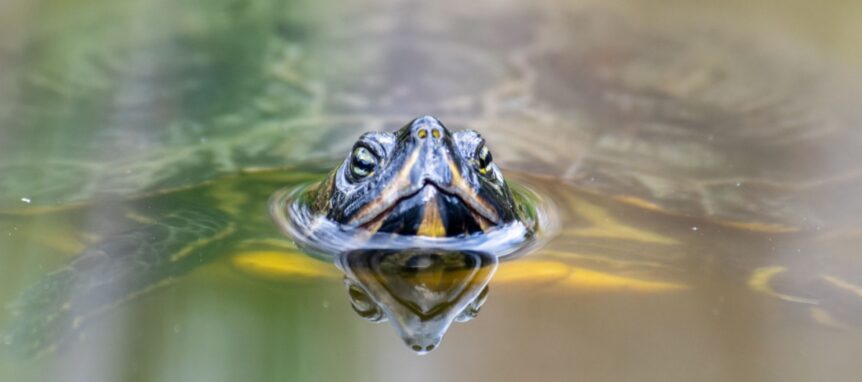
This freshwater turtle is native to Florida and is commonly found basking on logs in lakes, rivers, and marshes. With a dark, smooth shell and yellow lines on its limbs and neck, the peninsula cooter is one of the most recognizable turtles in the state.
They are excellent swimmers and herbivores, feeding mostly on aquatic vegetation. Because they are so often seen in public parks and freshwater environments, they’re a popular species for nature education and observation.
Softshell Turtle (Apalone ferox)
Florida softshell turtles look a bit different from other turtles, they have long necks, snorkel-like noses, and a flexible, leathery shell rather than a hard, domed one. These aquatic turtles are quick in water and can grow surprisingly large, sometimes exceeding 2 feet in length.
They prefer sandy-bottomed lakes and slow-moving streams. Their unique appearance and behavior make them an exciting discovery for curious kids and budding biologists.
Why Turtle Education Matters
Turtles are a vital part of Florida’s ecosystems. They help maintain healthy aquatic and terrestrial environments and are indicators of the overall health of their habitats. Unfortunately, many of Florida’s turtle species face threats due to habitat loss, pollution, climate disruptions, and human interference.
Teaching kids about turtles fosters a love for wildlife and an understanding of why conservation matters. Through guided nature walks, beach cleanups, and wildlife education programs, children can learn how their actions directly impact the animals they love.
Encouraging Respect and Protection
Observation and appreciation are key. Encouraging children to watch turtles from a distance, never disturb nesting sites, and participate in conservation efforts can help ensure these creatures thrive for generations to come. Camps and educational programs often reinforce these values by introducing children to wildlife in a safe, structured way that builds both knowledge and empathy.
Discover More With Camp Live Oak
At Camp Live Oak, campers are immersed in nature and introduced to wildlife like Florida’s turtles through fun, hands-on learning experiences. Whether it’s a nature walk in Birch State Park or a lesson on coastal ecology, campers leave with a greater appreciation for the animals that share our environment, and the knowledge of how to help protect them. These educational moments empower children to become thoughtful environmental stewards. With every encounter, they not only learn about Florida’s incredible wildlife but also their role in preserving it for the future.