
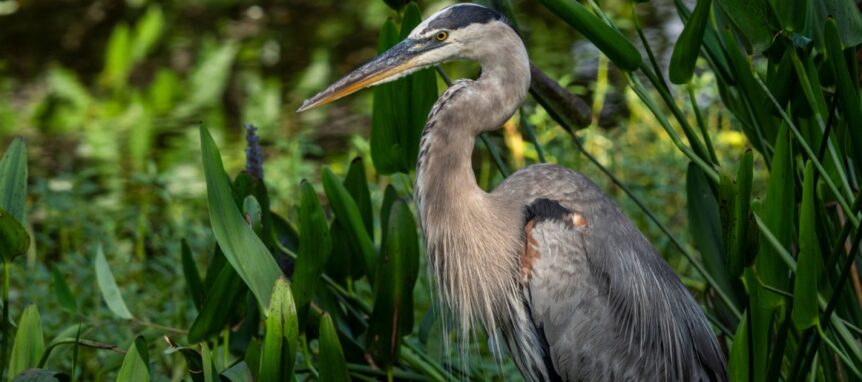
South Florida’s waterways are full of fascinating wildlife, but few birds are as striking and memorable as the Great Blue Heron. With its tall stature, graceful movements, and impressive wingspan, this bird is often one of the first animals children notice when exploring natural areas. Watching a Great Blue Heron hunt along the water’s edge can feel almost magical, as the bird stands perfectly still before striking with lightning-fast precision.
For campers spending time outdoors, learning about local wildlife helps bring nature to life. At Hugh Taylor Birch State Park, where many Camp Live Oak activities take place, Great Blue Herons are a familiar sight along the lagoon, trails, and shoreline. Spotting one during a nature walk or while exploring near the water is a memorable experience that sparks curiosity and encourages campers to observe the natural world more closely.
Recognizing the Great Blue Heron
The Great Blue Heron is the largest heron species found in North America. Standing nearly four feet tall with a wingspan that can reach six feet, these birds are both impressive and easy to recognize. Their bluish-gray feathers, long legs, and S-shaped neck give them a distinctive silhouette.
When flying, Great Blue Herons pull their necks back while extending their long legs behind them. This flight pattern helps distinguish them from other large birds like cranes or storks, which typically fly with their necks stretched forward.
Campers exploring Hugh Taylor Birch State Park may notice these birds standing quietly in shallow water or perched along the edge of the Intracoastal Waterway. Their calm, patient behavior makes them easy to observe if you take the time to watch carefully.
Masters of Patience
Great Blue Herons are often called patient hunters, and for good reason. Rather than chasing their prey, they rely on stillness and precision. A heron may stand motionless for several minutes, waiting for the right moment to strike.
When a fish, frog, or small aquatic creature swims nearby, the heron quickly extends its long neck and uses its sharp beak to spear the prey. This method of hunting is incredibly efficient and shows just how well adapted these birds are to their environment.
Watching this behavior can be fascinating for campers. It also provides a perfect opportunity to talk about animal adaptations and how wildlife survives in different ecosystems.
What Do Great Blue Herons Eat?
Great Blue Herons have a varied diet that includes fish, frogs, crustaceans, insects, and even small reptiles. Because they hunt in shallow water, they are commonly found along lakes, rivers, marshes, and coastal lagoons.
The waterways surrounding Hugh Taylor Birch State Park provide ideal hunting grounds for these birds. The park’s lagoon and nearby coastal habitats attract fish and other aquatic animals, which in turn attract predators like the heron.
For young nature explorers, observing this food chain in action helps them understand how ecosystems are connected and how each species plays an important role.
Why These Birds Matter
Great Blue Herons are more than just beautiful birds, they are an important part of the ecosystem. As predators, they help control populations of fish and other aquatic animals, contributing to the balance of wetland environments.
Their presence also signals a healthy habitat. When herons are seen regularly in an area, it often means that the water quality and food supply are strong enough to support them.
Teaching children about animals like the Great Blue Heron helps them see nature as an interconnected system rather than a collection of individual species.
Spotting a Heron at Camp
For campers exploring the trails and waterways of Hugh Taylor Birch State Park, spotting a Great Blue Heron can be an exciting highlight of the day. Because these birds move slowly and prefer quiet environments, the best way to observe them is to approach gently and watch from a distance.
Camp programs often encourage children to slow down, look carefully, and notice the wildlife around them. These moments of observation turn simple walks into memorable discoveries and help campers develop a deeper appreciation for the environment.
Learning Through Nature
Wildlife encounters are some of the most powerful educational moments children can experience. Seeing a Great Blue Heron in its natural habitat helps campers connect what they learn about animals, ecosystems, and conservation to real life.
At Camp Live Oak, campers regularly explore the natural beauty of Hugh Taylor Birch State Park, where wildlife like the Great Blue Heron can often be observed along the water and throughout the park. These experiences help children build curiosity, respect for nature, and a lifelong love of outdoor learning.
To learn more about Camp Live Oak’s nature-based programs and outdoor adventures, contact us here.