
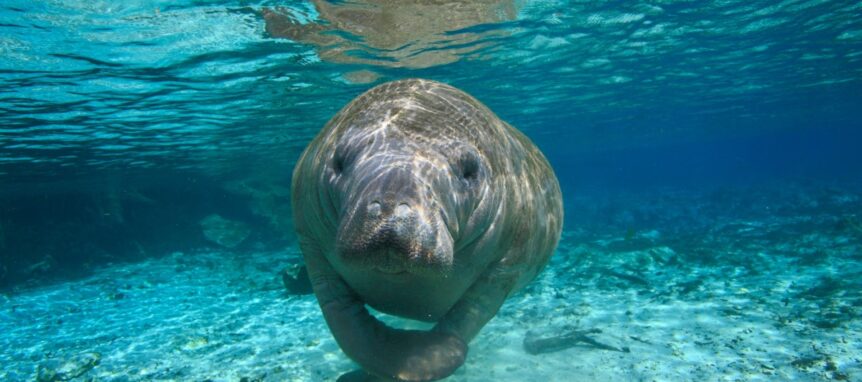
Florida is home to many fascinating animals, but few capture the hearts of children and adults quite like the manatee. These gentle giants are slow-moving, curious, and surprisingly graceful as they navigate the warm coastal waters and rivers of the Sunshine State. For campers and nature enthusiasts alike, spotting a manatee in the wild is an unforgettable experience, and one that often sparks curiosity and a deeper respect for the natural world.
With manatee season in full swing during the cooler months, it’s the perfect time to learn about these incredible creatures, how they contribute to Florida’s ecosystems, and what we can do to protect them.
Meet the Manatee: Florida’s Marine Mammal
Manatees, also known as sea cows, are large, plant-eating marine mammals that can weigh up to 1,200 pounds and reach lengths of over 10 feet. Despite their size, manatees are peaceful animals with no natural predators. They are part of a group of aquatic mammals known as sirenians, and their closest living land relatives include elephants and hyraxes.
Florida is home to the West Indian manatee, a subspecies called the Florida manatee. These slow-moving animals are commonly found in warm, shallow coastal waters, rivers, and springs. They spend most of their time grazing on seagrass and floating aquatic vegetation, which helps maintain a healthy underwater ecosystem.
Manatees in the Wild: A Special Sight at Birch State Park
One of the magical things about exploring Florida’s natural parks is the chance to see manatees in their native environment. Hugh Taylor Birch State Park, where Camp Live Oak hosts many of its nature-based activities, is located just off the Intracoastal Waterway in Fort Lauderdale; an area where manatees are occasionally spotted, especially during cooler months when they seek warmer waters.
Campers walking along the waterway or taking part in water-based activities may be lucky enough to catch a glimpse of one gliding slowly beneath the surface. Seeing a manatee in person makes a lasting impression, inspiring young campers to learn more about marine life and the importance of preserving Florida’s aquatic habitats.
A Lesson in Conservation
Manatees are a federally protected species, listed as “threatened” under the Endangered Species Act. Their slow speed and calm behavior unfortunately make them vulnerable to human activity, especially boat strikes. Pollution, habitat loss, and cold stress during winter months also pose threats to their survival.
At camp, these realities are transformed into opportunities for environmental education. Learning about manatees provides a hands-on way for kids to explore larger concepts like conservation, ecosystem balance, and the human impact on wildlife. Campers may also learn about rules that help protect manatees, such as slow-speed zones for boats, the importance of clean waterways, and not approaching or feeding wild animals.
These lessons go far beyond the textbook, when children feel a personal connection to the animals they’re learning about, they become more motivated to protect them.
Why Manatees Matter
Manatees are not just adorable, they play an important role in Florida’s aquatic ecosystems. As herbivores, they help manage seagrass beds and other plant growth, preventing overgrowth that could harm fish and other marine animals. Their gentle nature also makes them excellent ambassadors for marine conservation, helping people of all ages connect emotionally with the idea of protecting the planet.
For children especially, manatees serve as a perfect entry point into discussions about marine biology, habitat preservation, and responsible environmental behavior. They’re living proof that caring for the natural world isn’t just important, it’s essential.
Connecting Kids with Nature and Wildlife
Part of what makes outdoor learning so powerful is the sense of wonder and discovery it brings. Spotting a manatee for the first time, or even just learning about one in a nature-based program, can be a transformative experience. It opens the door to deeper exploration, thoughtful questions, and a strong connection to Florida’s natural world.
By engaging kids in wildlife education through activities at parks like Hugh Taylor Birch State Park, programs like Teen Eco Experience at Camp Live Oak help shape the next generation of environmental stewards. Whether they’re looking for manatees along the shoreline or learning how to care for local habitats, campers are immersed in real-life lessons that stick with them long after camp ends.
To learn more about our nature-based programs and how your child can get involved, contact us here.